Secure Your Global Career with the Right Insurance for Working Abroad
Working Abroad Without the Right Insurance Is a Gamble You Can’t Afford
Insurance for working abroad is a type of health and medical coverage designed specifically for people who live, work, or contract in a country other than their own.
Here’s a quick summary of what you need to know:
- What it covers: Doctor visits, hospitalization, emergency care, prescription medication, mental health, and often medical evacuation
- Who needs it: Expats, digital nomads, seasonal workers, short-term contractors, and working holiday travelers
- How long: Plans range from 3-month short-term options to multi-year annual renewals
- Cost range: Roughly $40–$240+ per month, depending on age, destination, and coverage level
- Key difference from travel insurance: It covers routine and ongoing healthcare, not just emergencies
- When to get it: Before you leave — some countries require proof of insurance just to enter
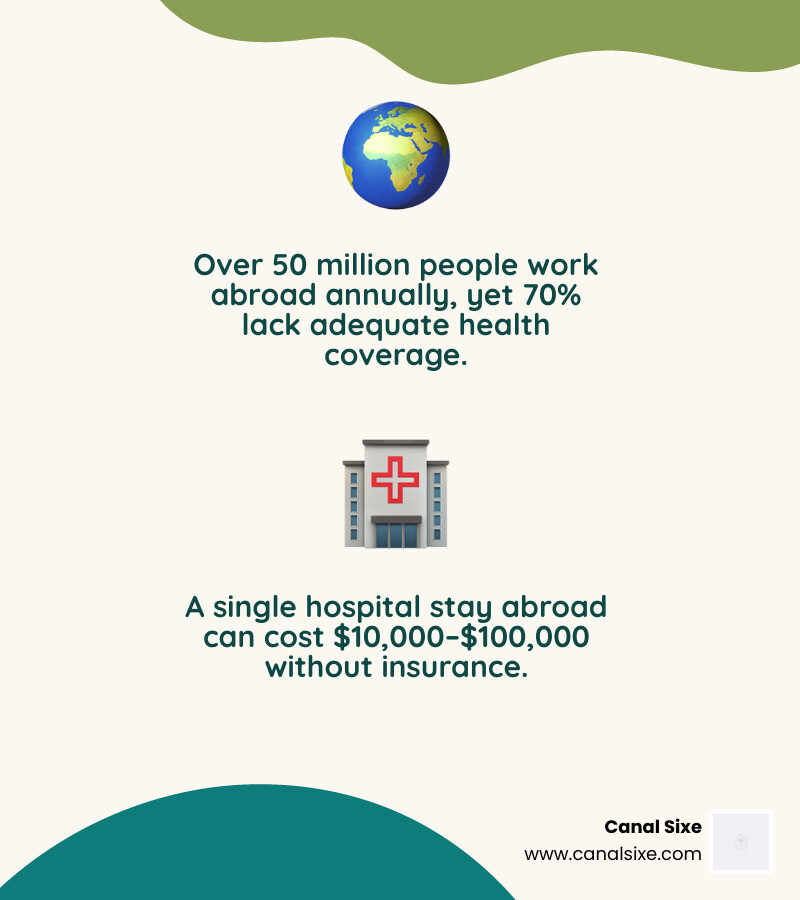
Each year, countless people relocate overseas for work, better pay, or new opportunities. But landing in a foreign country means stepping outside the healthcare system you know. Public healthcare may be unavailable to foreigners. Private care can be shockingly expensive. And a single hospital visit without coverage can wipe out months of savings.
Navigating a foreign healthcare system while you’re sick or injured is the last thing you want to deal with. The right insurance means you can focus on your work and your life — not on whether you can afford a doctor.
This guide breaks down everything you need to know: the types of coverage available, how to choose the right plan, what it costs, and which features matter most for global professionals.
Understanding International Health Insurance for Working Abroad
When we talk about insurance for working abroad, we are generally referring to International Private Medical Insurance (IPMI). This isn’t just a “safety net” for when things go wrong; it is a comprehensive healthcare solution that follows you across borders. Unlike the local insurance you might have had at home, international plans are built for mobility.
These policies provide access to a global network of high-quality hospitals and English-speaking doctors. For many of us, the biggest hurdle in a new country isn’t just the cost of care—it’s the language barrier and the complexity of the local bureaucracy. A solid international plan bypasses these issues by offering direct billing and 24/7 support.
At Canal Sixe – Global Insurance Solutions, we believe that financial simplicity is the key to a successful relocation. Whether you are a seasonal contractor in Portugal or a corporate executive in Japan, having a plan that guarantees private medical access ensures you receive the best care without the long wait times often associated with public systems in countries like Canada or the UK.
Why Health Insurance for Working Abroad Is Essential
You might think, “I’m healthy, why do I need this?” But insurance for working abroad is often more than a personal choice; it’s a legal necessity.
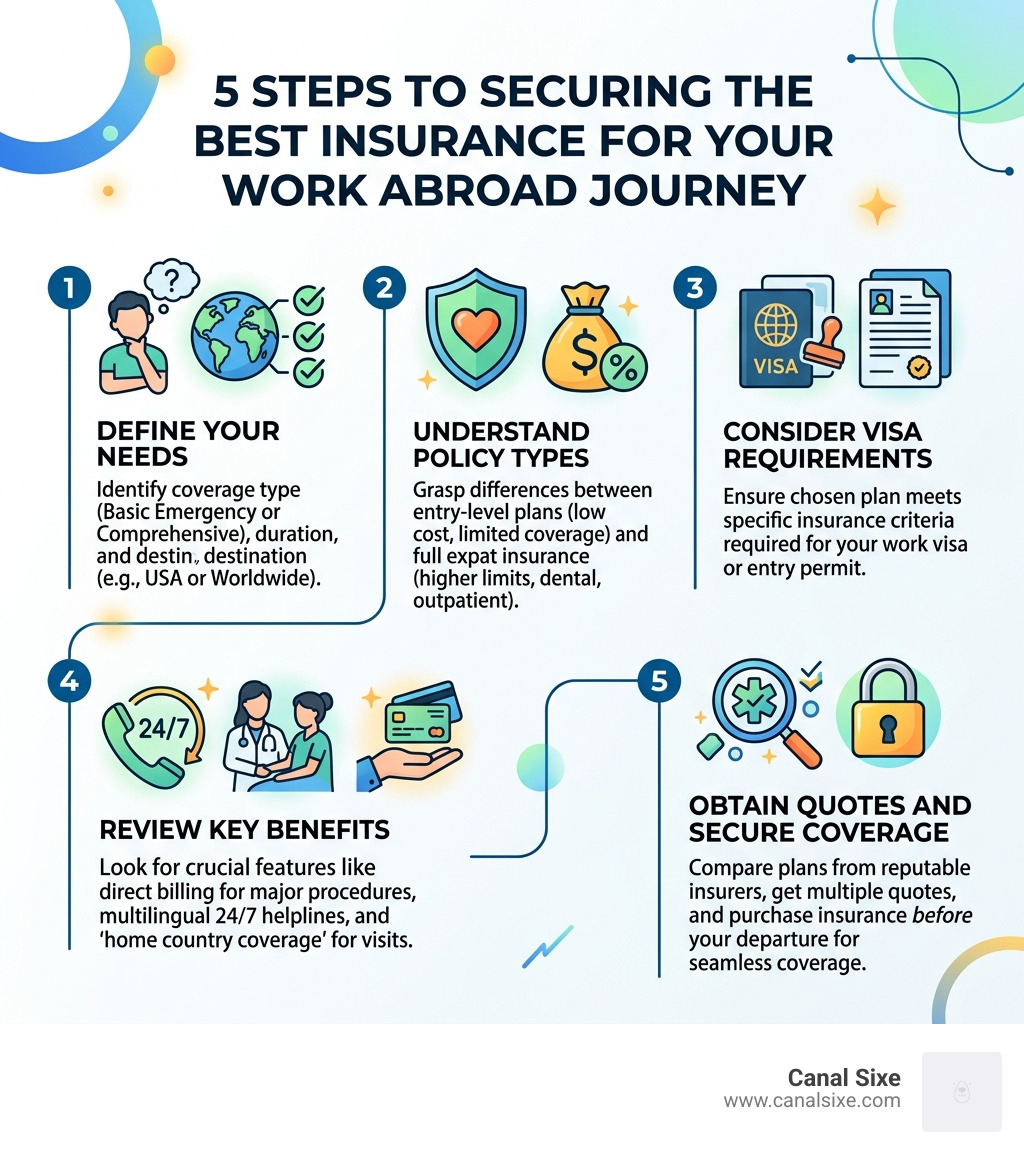
- Visa Compliance: Many nations, particularly those offering Digital Nomad Visas or Working Holiday Visas, demand proof of medical insurance as a condition of entry. Without it, your visa application could be rejected before you even pack your bags.
- Residency Requirements: In several countries, maintaining private health insurance is a legal condition for residency. Foreigners are often ineligible for state-funded healthcare, or they may find that the public system doesn’t meet the standards they are used to.
- Medical Evacuation: If you are working in a remote area or a developing country, local facilities might not be equipped to handle serious injuries. Repatriation and evacuation coverage can cost upwards of $100,000 out of pocket—an expense that is covered by most international plans.
- Financial Safety Net: Accidents don’t give notice. A broken limb or an emergency appendectomy in a private foreign clinic can cost thousands. Insurance ensures your global career stays on track financially.
By protecting your remote career, you ensure that a health hiccup doesn’t turn into a financial catastrophe.
International Health vs. Travel Insurance
One of the most common mistakes we see is professionals relying on standard travel insurance for long-term work assignments. While both offer protection, they serve very different purposes.
| Feature | Travel Insurance | International Health Insurance |
|---|---|---|
| Primary Purpose | Short-term trips and emergencies | Long-term living and routine care |
| Duration | Usually up to 90 days per trip | Annually renewable or 3-11 months |
| Routine Care | Not covered (no check-ups) | Covered (GP visits, prescriptions) |
| Chronic Conditions | Generally excluded | Often covered (with underwriting) |
| Medical Evacuation | Included (to nearest facility) | Included (often back to home country) |
| Home Country Cover | Rarely included | Often covered for up to 90 days |
Travel insurance is designed to “patch you up” and send you home. If you are actually living and working in a country, you need coverage for the “boring” stuff too—like prescriptions for a cold, a routine scan, or a visit to a specialist. For those on short-term assignments (3–11 months), specialized short-term international health plans offer a middle ground: the comprehensive care of an annual plan with the flexibility of a shorter term.
Key Coverage Features for Global Professionals
When you’re comparing insurance for working abroad, it’s easy to get lost in the fine print. We recommend focusing on the “Big Four” features that provide the most value for your daily life:
- Hospitalization (In-patient): This is the core of any policy. It covers surgery, hospital stays, and intensive care. Most plans cover 100% of these costs in private facilities.
- Outpatient Care: This includes doctor visits, diagnostic tests (like X-rays or blood work), and specialist consultations. While some basic plans exclude this to save on premiums, we highly recommend it if you want to avoid paying $150 every time you have a minor ailment.
- Prescription Medication: In many countries, the cost of medicine isn’t subsidized for expats. A plan that covers prescriptions can save you a significant amount over a year.
- Mental Wellness: Working in a new culture can be stressful. Modern international plans often include teletherapy, counseling, and employee assistance programs to support your mental health while you adapt to your new environment.
Getting comprehensive coverage for global professionals means you don’t have to choose between your health and your budget.
Specialized Insurance for Working Abroad Plans
The modern workforce isn’t one-size-fits-all, and neither is insurance. Depending on your “worker type,” you might need a specific kind of plan:
- Digital Nomads: These plans are built for those who move frequently. They often cover multiple countries (e.g., “Worldwide excluding USA”) and include perks like coverage for electronics or gear.
- Working Holiday Visas: Popular in places like Australia and New Zealand, these plans focus on emergency care but also cover “adventure sports” like surfing or hiking, which are often excluded from standard health policies.
- Short-Term Contractors: If your project is only 6 months long, don’t pay for a 12-month policy. Many providers now offer flexible insurance plans for expats that cover 3 to 11 months, providing the same level of care as an annual plan but for a fraction of the cost.
- Global Teams: For employers, group plans can cover staff and contractors across 175+ countries under a single policy, simplifying administration and ensuring every team member has equal access to care.
Managing Pre-existing Conditions and Chronic Care
A common question we hear is: “Can I get coverage if I already have a health condition?” The answer is yes, but it requires understanding medical underwriting.
- Full Medical Underwriting: You disclose your entire medical history. The insurer may exclude your condition, charge a higher premium (a “loading”), or accept it as is. The benefit is that you know exactly what is covered from day one.
- Moratorium Underwriting: The insurer doesn’t ask for your history upfront. Instead, they won’t cover any condition you’ve had in the last 2 to 5 years until you have been symptom-free and treatment-free for a continuous period (usually 24 months) under the new policy.
- Chronic Care: Some high-end plans include “Chronic Condition” riders. This is essential if you have a condition like asthma or diabetes that requires ongoing management, as many standard plans only cover “acute” flare-ups.
Always be honest during disclosure. Failing to mention a condition can lead to a claim being denied later, even if the claim is unrelated to the pre-existing issue.
How to Choose and Manage Your Policy
Choosing the right insurance for working abroad is a balancing act between your budget and your destination.

- Destination Factors: Healthcare costs vary wildly. A plan for Thailand will be significantly cheaper than one for the USA. In fact, most global plans are split into “Worldwide” and “Worldwide Excluding USA” to keep premiums affordable for those not heading to the States.
- Age-Based Premiums: Like all insurance, costs rise as we get older. However, many international plans offer “community rating,” which means your premium won’t spike just because you personally filed a claim last year.
- Coverage Zones: Some providers allow you to pick specific zones (e.g., Africa only, or Europe only). This is a great way to save money if you know you won’t be traveling outside a specific region.
Setting Up Coverage Before Your Move
We cannot stress this enough: get your insurance sorted before you leave.
Many countries require your insurance certificate to be dated before your arrival for visa purposes. Furthermore, setting it up early ensures you are covered from the moment you step off the plane. The “settling in” period is often when accidents happen—lifting heavy luggage, navigating new traffic patterns, or reacting to local food and water.
Before you sign, make sure to read the Terms and Conditions to understand waiting periods. For example, some plans have a 10-month waiting period for maternity or dental work, meaning you can’t claim for those services immediately after joining.
Filing Claims and Accessing Support while Working Abroad
In the old days, filing an insurance claim meant mailing physical receipts across the world and waiting months for a check. Today, the process is almost entirely digital.
- Digital Portals: Most modern insurers allow you to snap a photo of your receipt and upload it via an app. Claims are often processed and reimbursed within 5 to 10 business days.
- Direct Billing: For major procedures or hospital stays, your insurer can often pay the hospital directly. This is a lifesaver, as it prevents you from having to put a $10,000 bill on your personal credit card.
- 24/7 Helplines: If you’re in a crisis at 3 AM in a country where you don’t speak the language, a 24/7 helpline with multilingual support is invaluable. They can coordinate with local doctors and even arrange for a translator.
At Canal Sixe, we value transparency and ease. You can learn more About Us and our mission to make global finance and safety accessible for everyone.
Frequently Asked Questions about Insurance for Working Abroad
How much does international work insurance typically cost?
The cost of insurance for working abroad depends on several variables, but here are some general benchmarks:
- Basic Emergency Plans: Can start as low as $40–$60 per month. These are great for young travelers on a budget who just want to meet visa requirements.
- Comprehensive Expat Plans: Typically range from $150 to $250 per month. These include outpatient care, dental, and higher coverage limits (often up to $2 million or more).
- Factors that increase price: Including the USA in your coverage, choosing a low deductible (the amount you pay out of pocket), and adding “addons” like maternity or vision care.
Can I get insurance after I have already moved?
Yes, you can usually buy a policy after you have arrived, but there are risks. Some insurers may view you as a higher risk if you apply while already abroad, and you will likely face “waiting periods” where you cannot claim for the first 30 days. Additionally, if you have already developed a health issue since arriving, it will be treated as a pre-existing condition and likely excluded. If your visa requires insurance, you must have it before entry.
Does my policy cover me when I visit my home country?
Most high-quality international plans include “Home Country Coverage.” This typically allows you to return home for visits (usually up to 90 days per year) and remain fully covered. This is incredibly useful if you prefer to see your family doctor for routine check-ups or if you want the comfort of being treated in your native language for a non-emergency procedure. However, if you move back home permanently, you will usually need to switch to a local domestic policy.
Conclusion
Securing your global career is about more than just finding the right job—it’s about ensuring you have the infrastructure to stay healthy and financially secure while you’re there. Insurance for working abroad provides the peace of mind you need to take risks, explore new cultures, and build a life overseas.
At Canal Sixe, we specialize in making the complex world of safety finance simple. We believe that whether you are flying across the ocean or taking a train across a border, your health should never be a source of stress. By choosing a plan that offers global mobility, private access, and digital ease, you are investing in your most important asset: yourself.
Secure your global journey with Canal Sixe today, and step into your international career with confidence.