
The Ultimate Guide to Real Time Airport Transport Tracking
Why Airport Taxi Real Time Tracking Changes Everything About Your Journey
Airport taxi real time tracking lets you see exactly where your driver is, get a live ETA, and receive automatic updates — all from your phone, before you even collect your bags.
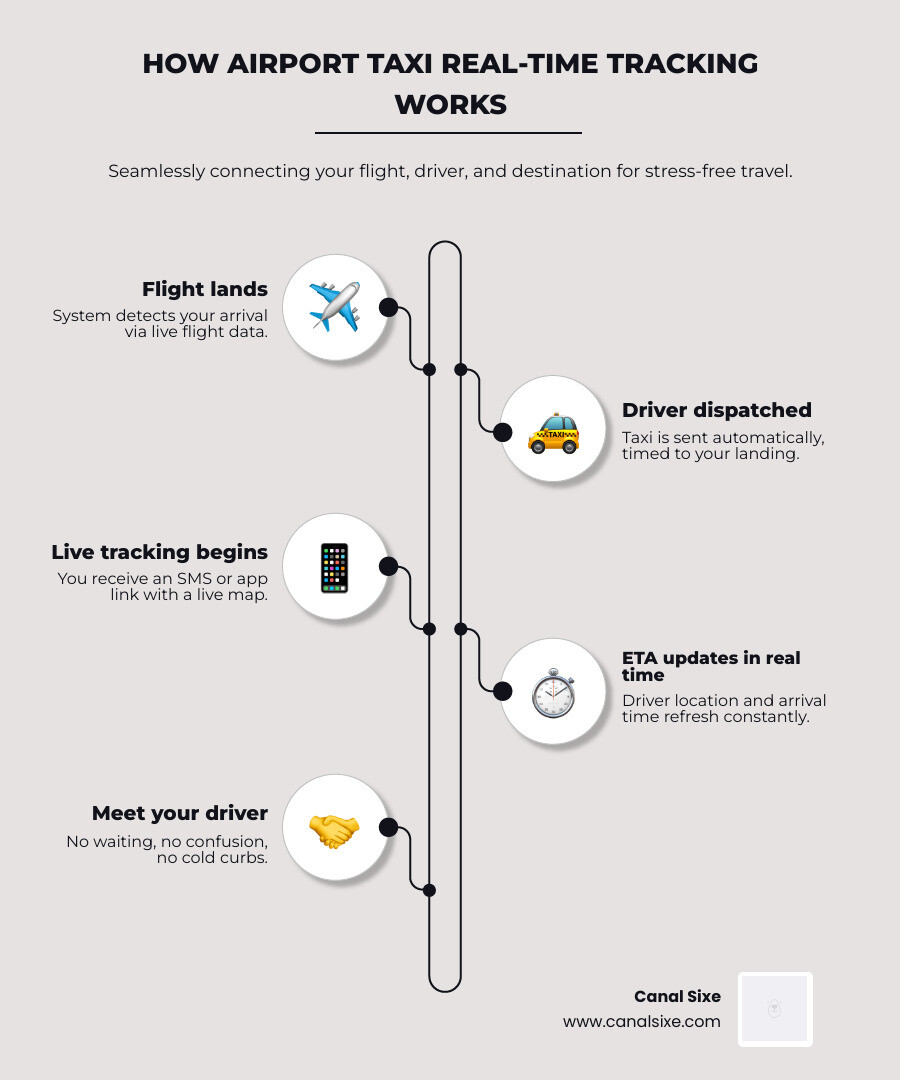
Here’s how it works at a glance:
| Step | What Happens |
|---|---|
| 1. Flight lands | System detects your arrival via live flight data |
| 2. Driver dispatched | Taxi is sent automatically, timed to your landing |
| 3. Live tracking begins | You receive an SMS or app link with a live map |
| 4. ETA updates in real time | Driver location and arrival time refresh constantly |
| 5. You meet your driver | No waiting, no confusion, no cold curbs |
Every day, thousands of vehicles flow through airport pick-up zones, drop-off lanes, taxi stands, and ride-share areas. The pressure on these spaces is enormous — and it’s growing.
For passengers, the stress is real. After a long flight, the last thing you want is to stand outside scanning for a car with no idea when it’s coming. For drivers, unpredictable arrival times mean wasted fuel and idle hours. For airports, curbside chaos directly damages revenue — research shows that every 1% improvement in passenger satisfaction delivers a 1.5% boost in non-aeronautical revenue.
Real-time tracking fixes this. It connects flights, drivers, and passengers into one live system — so everyone knows what’s happening, when it’s happening.
This guide covers how the technology works, why it matters, and what it means for your next trip.
How Airport Taxi Real Time Tracking Works
At its heart, airport taxi real time tracking is a symphony of several high-tech layers working together. It starts with GPS mapping, which provides the precise coordinates of the vehicle. This data is fed into a cloud-based dispatch system that calculates a live ETA based on current traffic conditions and distance.
When we look at real-time taxi tracking for airport transfers, the process is designed to be invisible yet incredibly helpful. Once you book your ride, the system uses geolocation to create a “digital tether” between your smartphone and the driver’s vehicle.
Key technologies that make this possible include:
- Telematics: Onboard hardware that monitors vehicle health and location.
- Automated Alerts: Systems that trigger SMS notifications the moment your driver enters the airport perimeter.
- Data Portability: The ability for travel data to move seamlessly between your booking app, the driver’s navigation, and airport security systems.
For you, the passenger, this often arrives as a 12-character secure code or a unique link sent via text. When you click it, you see a live map of the car moving toward your terminal. It’s the end of the “where is my driver?” phone call.
The Critical Role of Flight Integration in On-Time Pickups
The biggest challenge with airport transfers isn’t the drive; it’s the timing. Flights are rarely exactly on time. This is where API synchronization becomes a game-changer. Modern tracking systems sync directly with FAA data and airline databases to monitor the “inbound leg” of your journey.
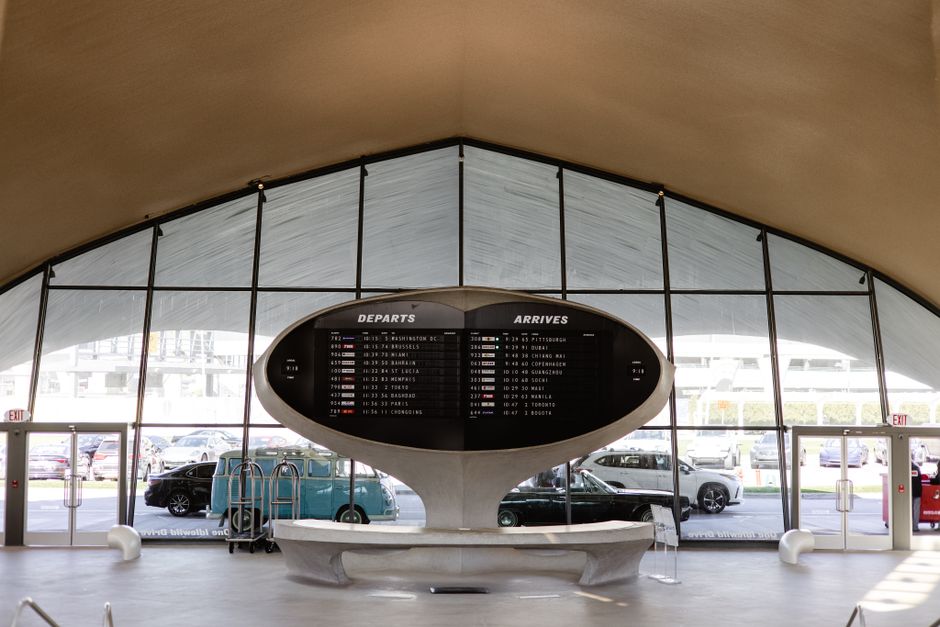
Whether your flight is thirty minutes early or three hours late, real-time flight tracking in Dallas and other major hubs ensures the chauffeur knows before you even touch the tarmac. The system makes landing time adjustments automatically. Instead of a driver sitting at the curb for two hours (and charging you waiting fees), the car is dispatched exactly when the flight is confirmed to land.
Enhancing Reliability with Airport Taxi Real Time Tracking
By monitoring the flight status in a live loop, dispatchers can achieve a zero-wait policy. This precision is vital for meet-and-greet services. When a driver is instructed to meet you at the baggage carousel, they aren’t just guessing when you’ll emerge. They are using data to time their walk from the parking garage to the arrivals hall, ensuring they are standing there with a sign the moment you clear the gate.
Managing International Arrivals and Customs Delays
International travel adds layers of complexity, such as roaming issues and customs queues. Airport taxi real time tracking software often includes in-app chat features that work over airport Wi-Fi, bypassing the need for expensive international calls. With multi-lingual support and time-zone synchronization, the software ensures that “3:00 PM” means the same thing to a passenger from Tokyo and a driver in London.
Benefits for Passengers, Drivers, and Airport Operators
The implementation of tracking technology creates a “win-win-win” scenario. Statistics show that 10 out of 10 airport transfer providers see up to a 3x boost in productivity when they integrate real-time tracking with flight coordination.
| Stakeholder | Primary Benefit | Key Statistic |
|---|---|---|
| Passengers | Reduced stress and zero wait times | 92% increase in satisfaction with live estimators |
| Drivers | Better performance and less idling | 20% increase in driver performance |
| Airports | Reduced congestion and higher revenue | 1.5% NAR increase for every 1% satisfaction gain |
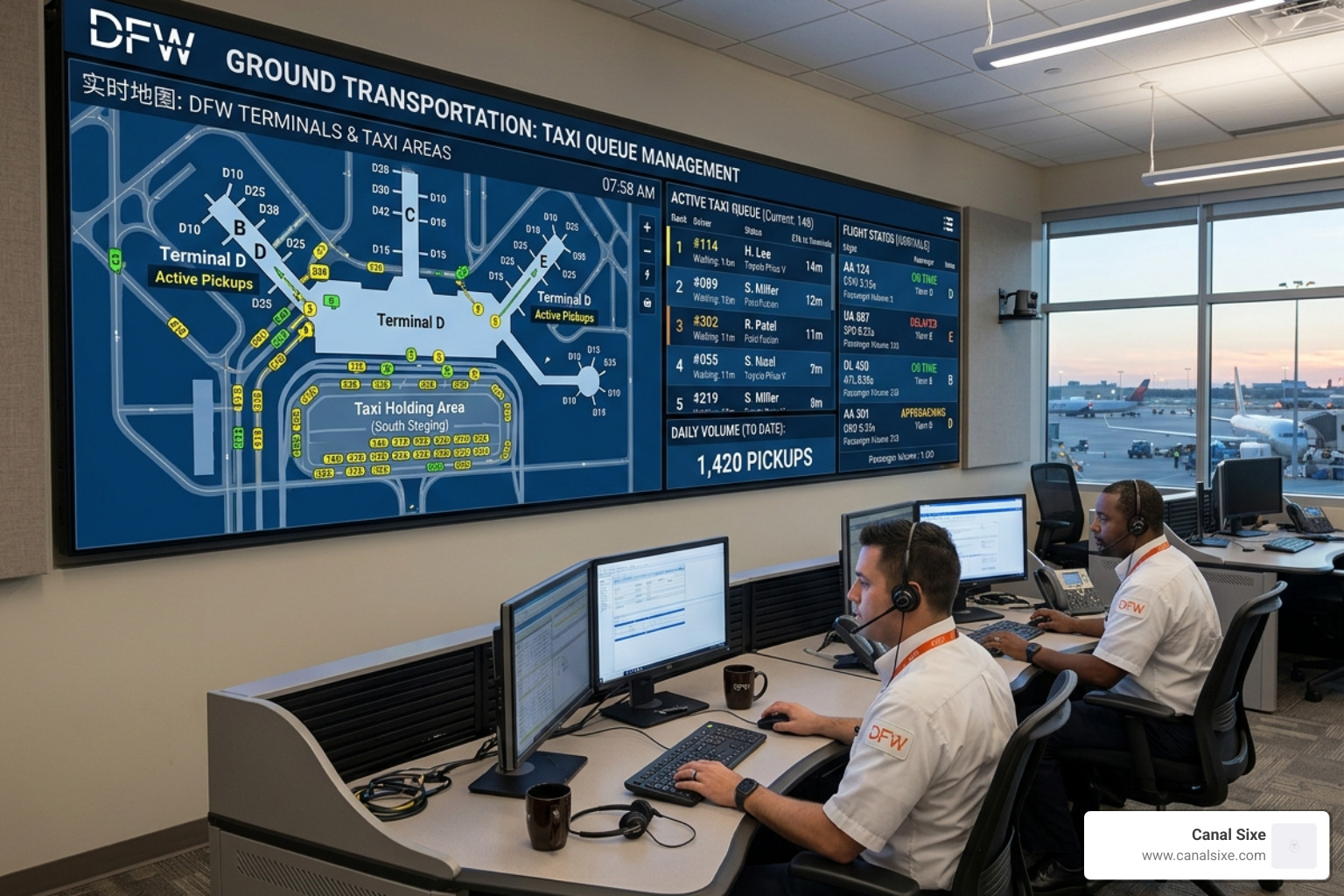
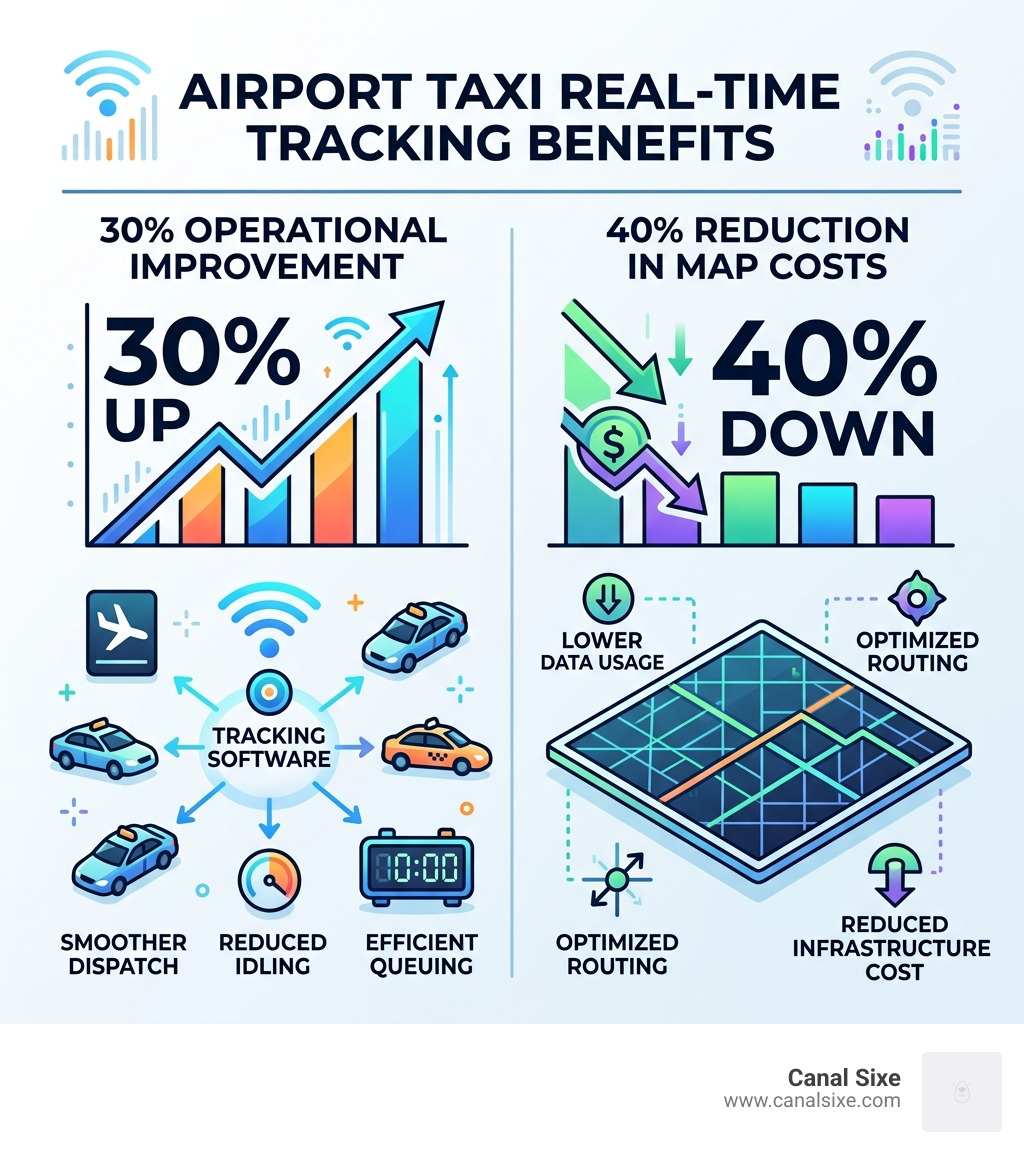
For airport operators, this is about revenue optimization. When taxis aren’t circling the terminals aimlessly, fuel consumption drops, and the “modal split” (the balance between taxis, ride-shares, and buses) becomes easier to manage. Cost savings are also significant; some operators report a 15% overall cost reduction simply by automating the dispatch process.
Safety and Security through Airport Taxi Real Time Tracking
Beyond convenience, there is the matter of Duty of Care. For corporate travelers, ISO 31030 compliance requires companies to know where their employees are during a trip. Airport taxi real time tracking provides a digital audit trail. If a car takes an unusual route, the system flags it. Emergency assistance buttons in the app can alert dispatchers instantly, and secure payments ensure no cash changes hands in an unfamiliar city.
Solving Curbside Congestion with Intelligent Monitoring
Curbside zones are the “critical arteries” of airport ground operations. At major hubs like JFK or Heathrow, infrastructure redevelopment often forces taxi stands to move. Without tracking, this would be a nightmare. However, AI Transforming Airport Operations through video analytics allows airports to monitor taxi queues in real-time.
Virtual dispatch systems, like those used during the JFK Terminal redevelopment, allow drivers to wait in a remote lot and only move to the curb when the system detects a passenger is ready. This reduces queue lengths and allows for parking violation alerts to be sent automatically if a vehicle dwells too long in a high-traffic lane.
Future Trends: AI and Predictive Analytics in Ground Transportation
The next frontier of airport taxi real time tracking involves predictive demand. By using machine learning, systems can look at historical data, weather patterns, and flight schedules to predict a surge in taxi demand before it happens.
We are already seeing Schiphol autonomous mobility testing for moving passengers, and the same logic applies to ground transport. Future trends include:
- Sustainability: Prioritizing electric vehicle routing to reduce the airport’s carbon footprint.
- Smart City Integration: Taxis communicating with city traffic lights to find the fastest path out of the airport.
- GHG Protocol Compliance: Automated reporting of carbon emissions for every taxi trip taken.
Frequently Asked Questions about Airport Transport Tracking
How does real-time tracking handle flight delays?
The tracking software is linked via API to global flight databases. If your flight is delayed, the system automatically pushes your pickup time back. In many cases, drivers are not even dispatched until the “wheels down” signal is received, ensuring they are there when you are, without extra waiting fees.
Is my location data private when tracking an airport taxi?
Yes. Most reputable tracking links are “time-limited.” The geolocation sharing typically activates 15–30 minutes before your scheduled pickup and deactivates the moment the ride is marked as completed in the system.
Does real-time tracking reduce the cost of airport transfers?
Indirectly, yes. By reducing driver idling time and optimizing routes, companies can offer more competitive fixed rates. Furthermore, it eliminates “hidden” waiting charges that often occur when passengers and drivers can’t find each other in a crowded terminal.
Conclusion
The evolution of airport taxi real time tracking has turned a once-stressful part of travel into a seamless, data-driven experience. From the AI-powered curbside monitoring at DFW to the SMS-tracking links in London, the goal is simple: to get you from the gate to your destination without a second of wasted time.
At Canal Sixe, we understand that travel is about more than just the movement — it’s about the peace of mind that comes with knowing your logistics are handled. We specialize in making the financial side of your travel and safety needs just as smooth as your taxi pickup. Whether it’s air travel, hotels, or ensuring your health and safety on the road, our fintech solutions are designed to simplify your journey.
Ready to take the stress out of your next trip? Simplify your travel and safety finance with Canal Sixe and experience the future of accessible, easy-to-manage travel.
